How to Renew CPR Certification: Durham Guide
Renewing CPR works best when you start with the card you already have, match the course name, book before the deadline, handle the required materials, and keep the new card easy to find.


Renewing CPR works best when you start with the card you already have, match the course name, book before the deadline, handle the required materials, and keep the new card easy to find.

CPR is the emergency skill. BLS is the broader hands-on class that teaches CPR with AED use, choking relief, age-group differences, and the structure many schools, employers, and healthcare programs ask for.
For the AHA BLS card most readers mean here, CPR certification lasts 2 years. The bigger issue is not the number itself but making sure the card stays current before a job, school, or clinical site checks it.

CPR is the emergency response used when a person is unresponsive and not breathing normally or is only gasping. It gives bystanders a way to keep blood moving until an AED or EMS can take over.
Burn first aid depends on what caused the burn. A minor kitchen scald, a chemical exposure, and an electrical injury may all damage skin, but they do not call for the same first response.

Stopping bleeding still starts with firm direct pressure, but the right response changes fast when the wound is deep, the blood loss is heavy, or the person starts looking worse.
First aid is the care you give in the first minutes after someone gets hurt or suddenly becomes ill. It does not replace professional treatment, but it can keep a situation from getting worse before help takes over.
Good bloodborne pathogens training should make exposure risk, PPE, sharps safety, cleanup steps, and reporting procedures feel clear before a real incident puts a worker on the spot.
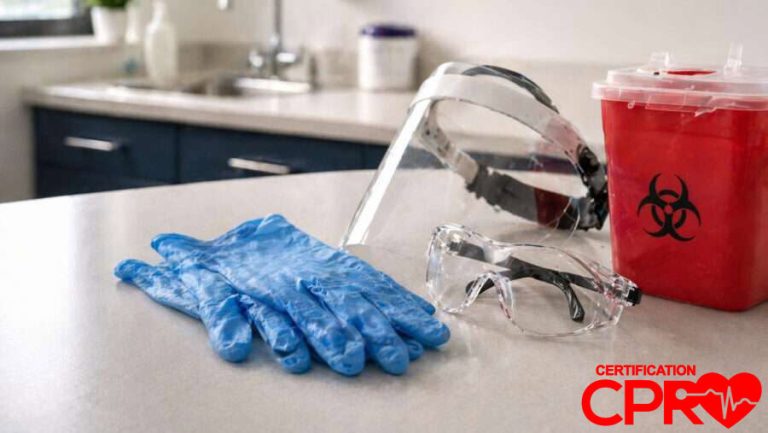
Bloodborne pathogens are infectious microorganisms in human blood that can cause disease. The term matters at work because some jobs create serious exposure risk and need training, protective steps, and a response plan.

AED pad placement is easier than it feels in the moment: on an adult, one pad usually goes upper right chest and the other lower left. For children and infants, the real job is following the pad diagrams and keeping the pads from touching.
No products in the cart.